Electropolishing vs Electroplating: What the Shine on Your Kitchenware Really Means for Wholesale Buyers
Two racks can shine the same on day one and look very different a year later. Electropolishing removes a layer from stainless steel; electroplating adds one. Here is how to tell them apart.
Hold two racks up to the light: one is stainless steel, electropolished; the other is iron, chrome plated. Both throw back the same mirror shine, and in a catalogue photo they are indistinguishable. The difference is not on the surface — it is what the surface is. One finish is the steel itself, smoothed from within; the other is a skin laid over a different metal. That distinction decides which rack still looks new after a year above a steamy sink, and which one starts to show its real metal.
The two finishes at a glance
| Finish | What it does | Base metal | Look | Weak point |
|---|---|---|---|---|
| Electropolishing | Removes a thin surface layer | Stainless steel | Smooth, bright satin to mirror | None to peel — the surface is the steel itself |
| Electroplating (chrome) | Adds a thin layer of chromium | Iron | Bright, hard mirror shine | Scratches or chips expose iron, which rusts |
| Electroplating (black) | Adds a thin layer of black plating | Iron | Bright black | Scratches or chips expose iron, which rusts |
| Powder coating (black) | Adds a thick polymer coat | Iron | Matte black | Chips at the edges if knocked; thicker coat resists rust better than plating |
1. Electropolishing takes a layer away
Electropolishing is a subtractive process. The stainless steel part goes into an electrolyte bath as the anode, and an electric current dissolves a thin layer off the surface — the microscopic peaks first, which is why the surface comes out smoother and brighter. Nothing is added. When the process is done, the surface is still the same stainless steel, only smoother, with a stronger chromium-rich passive layer on top.
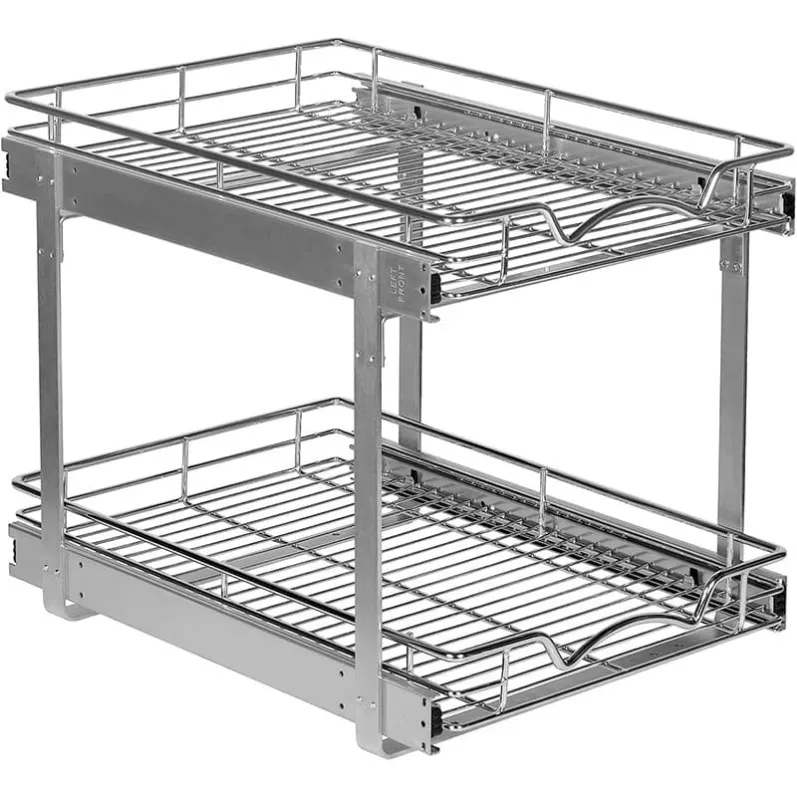
That is why an electropolished finish cannot peel, flake, or wear through to a different metal: there is no coating to lose. Our two-tier pull-out basket is finished this way — electropolished 304 stainless steel — which suits the dampest spot in the kitchen, inside a base cabinet next to the sink. A smoother surface also wipes clean faster, since there are fewer microscopic pits for grease and limescale to hold on to.
2. Electroplating adds a layer on top
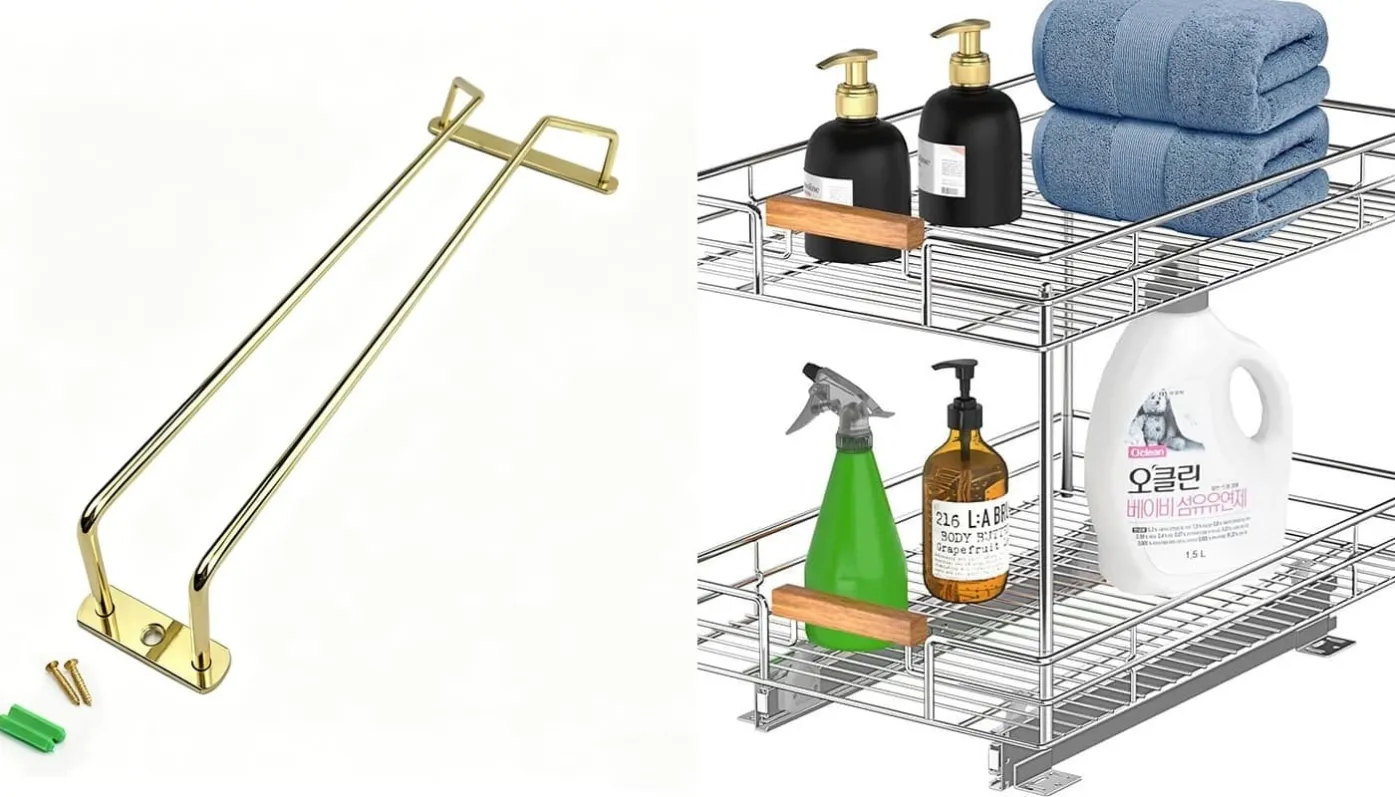
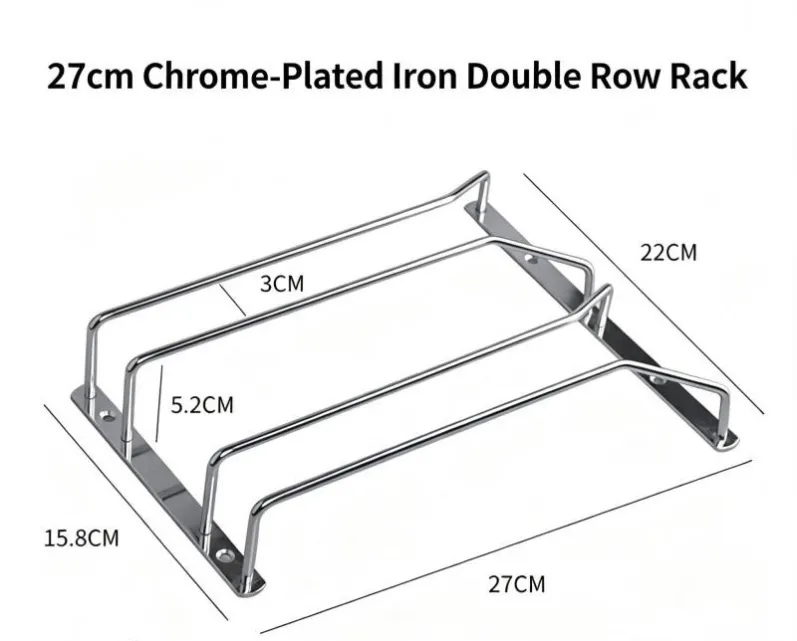
Electroplating works the other way around. The part is dipped in a bath and a thin layer of another metal is deposited onto it — chromium for a chrome finish, a black plating for a black finish. The shine buyers love is the plated layer itself, not the metal underneath. Our wine glass racks are made this way: the chrome-plated iron rack (Chrome Plated Iron) and the black-plated iron rack (Black Plated Iron, model WR3501BD) both get their look from an electroplated coat over an iron frame.
A plated finish is bright and hard, and it costs less than solid stainless steel, which is why it is so common on display and storage pieces. But the layer is thin: scratch it or chip it on a shelf edge, and the iron underneath is exposed — and exposed iron rusts.
3. How each finish ages in a real kitchen
The honest test of a finish is not day one but year one. An electropolished stainless piece ages evenly: marks from use stay in stainless steel, so they do not become rust spots, and it rinses clean with a damp cloth.
A plated iron piece ages at its weakest points first — the edges, the joints, and anywhere glasses or pans rub against it. Once a chip opens, moisture gets under the plating and the rust spreads underneath the coat, lifting more of it. That is why plated iron suits dry places best: a wine glass rack hanging over a bar, a storage rack in a pantry, a display piece that is handled gently. Put the same plated rack directly over a sink, and its life gets much shorter.
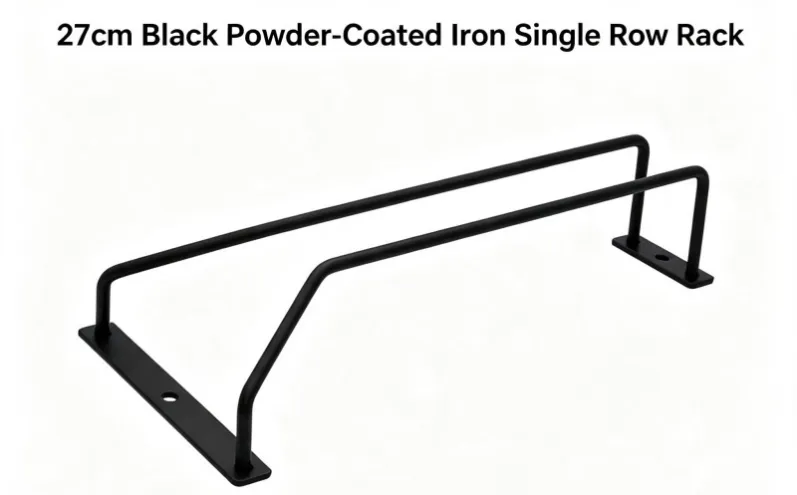
One finish buyers sometimes confuse with plating is powder coating. Our black powder-coated wine rack (Black Powder Coated Iron, model WR3501BP) is not plated at all: a polymer powder is sprayed on and baked into a thick matte coat. It protects the iron better than plating, but it is a coat all the same — knock a sharp edge and it can chip.
4. How to tell them apart before you order
Shine alone tells you nothing, so check the base metal instead. First, ask what the part is made of underneath the finish — stainless steel or iron. Second, use a magnet: iron is strongly magnetic, while 304 stainless steel is barely magnetic, if at all, so a magnet that snaps hard to the rack is telling you the base metal is iron. Third, look at an edge or an underside: plating shows as a distinct bright skin, while electropolished steel looks the same all the way through.
Price is a useful cross-check, not a proof: solid stainless steel generally costs more than plated iron, so a mirror-bright rack priced far below a stainless one is almost certainly plated. Match the finish to the spot it will live in — wet or dry — before you match it to the look you want.
How buyers in different markets choose
In the United States, buyers ordering for kitchens and foodservice lean toward electropolished stainless for anything near water, and keep plated iron for dry display and bar storage, where the mirror shine sells the piece. In Europe, where design-led retail dominates, chrome-plated iron moves well as a display finish, and buyers weigh the shine against the care the piece will need at home. In Latin America, price-sensitive home retail often starts with plated iron racks, while buyers supplying restaurants and hotels choose stainless for pieces that will be washed daily.
Frequently asked questions
Does electropolishing add a coating to stainless steel?
No. Electropolishing removes a thin layer from the surface of the stainless steel itself. The surface that remains is still stainless steel, with a stronger passive layer, so there is nothing to peel or flake off.
Why does chrome-plated iron rust when stainless steel does not?
The chrome layer is thin. Once a scratch or chip exposes the iron underneath, air and moisture reach the iron and it rusts. Stainless steel resists rust through its own chromium content, so a scratch in stainless is still stainless.
Which finish suits a rack that hangs over a sink?
Electropolished stainless steel. It has no coating to lose, resists rust in damp air, and wipes clean. Save plated iron for dry spots such as a bar, a pantry, or a display wall.
Conclusion
Electropolishing and electroplating both make metal shine, but they are opposite ideas: one removes a layer from stainless steel, the other adds a layer of a different metal onto iron. The first finish is the product itself, so it cannot peel; the second is a skin, so its life depends on the skin staying intact. Choose the finish by where the piece will live — wet or dry — and the shine will still be there a year later.
Browse our kitchen organizer range and tell us where your customers will use each piece — we will confirm the finish, the material, and the packing for your next order.