Trends
Kitchen Tools for HORECA: 5 Tools Restaurants and Cafés Reorder Most in 2027
A distributor learned the hard way that home tools fail fast in a commercial kitchen. Here are five commercial-ready tools that survive daily service and keep reordering.
A home tool is used once a day. In a commercial kitchen it is used a hundred times a day — and that is where a home tool fails fast. A distributor in the trade found that out the expensive way, with an order he had placed with another supplier: he supplied a small restaurant chain with the same kitchen tools he sold to home-goods stores. The first order looked like a win: light, cheap, and easy to ship. Three months later the complaints arrived — bent handles, a warped press, dented pitchers. He was not our customer, and the goods had not come from us.
That is the difference between home tools and HORECA tools. Restaurants, cafés, bakeries, and food stalls do not buy a tool once — they buy it, wear it out, and reorder it. The products that win repeat orders are made from food-grade materials and built to survive daily service. Here are five tools worth building into your 2027 HORECA range, all from our current catalogue.
The five tools at a glance
Tool | Material | Sizes | Best for |
|---|---|---|---|
Garlic press | Food-grade aluminum | 100 g | Prep work, garlic and ginger paste |
Burger smasher | SS304 | 13 / 14 / 16 cm | Burger shops, BBQ, diners |
Butter roller | SS304 | 1 L / 1.8 L | Bakeries, breakfast diners, food stalls |
Milk frothing pitcher | SS304 | 350–2000 ml | Cafés, milk tea shops, baristas |
Dish drying rack | Iron | 43 × 33 × 15 cm | Café pantries and canteens |
1. Garlic press: the prep-work workhorse
In a restaurant kitchen, garlic is pressed by the kilo every day. A press that bends, jams, or leaves chunks behind slows down the whole prep line. Our garlic press (KT10-7) is food-grade aluminum, light at 100 g, with a double-layer design that presses evenly into a smooth paste.
It is not limited to garlic. The same press grinds ginger, shallots, chili,
nuts, cooked potato, and pumpkin, and it makes fine fruit and vegetable puree — one tool for several prep tasks. It rinses clean under running water. The MOQ is 200 pieces.
2. Burger smasher: thin patties, fast service
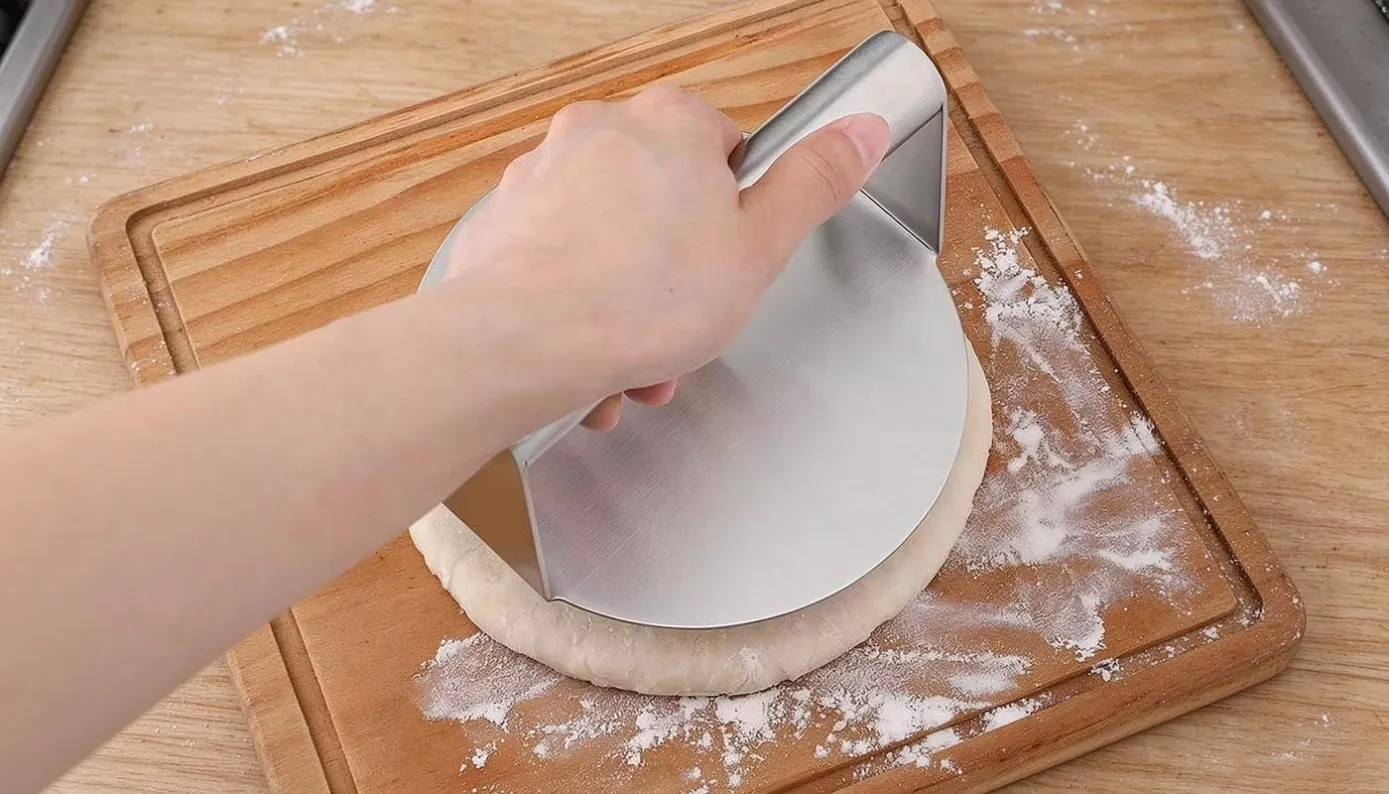
A smash burger lives or dies on the press. The patty has to go thin and even on a hot griddle, release cleanly, and come back for the next order in seconds. Our burger smasher (LYK108) is food-grade SS304 stainless steel, with a smooth, seamless surface that will not stick. It is dishwasher safe.
Three sizes are available — 13 cm, 14 cm, and 16 cm — and three handle options — solid wood, plastic, and steel. It also works for rice cakes, minced meat pies, and handmade snacks. The MOQ is 106 pieces, packed one piece per box.
3. Butter roller: consistent coating at volume
Buttering bread by hand is slow and uneven — a real problem at breakfast service, when a diner or bakery needs dozens of slices coated the same way, fast. Our butter roller (LYK110) solves it: pour melted butter in, roll the bread over the perforated drum, and the butter spreads in an even layer without mess.
The roller is food-grade thick SS304 stainless steel, sturdy and rust-resistant for daily commercial use. Two capacities are available, 1 L and 1.8 L, and three stand choices — no feet, short feet, and long feet — fit different counter heights. The drum detaches for easy cleaning. The MOQ is 50 pieces.
4. Milk frothing pitcher: the café essential
No café tool is used more often than the milk pitcher. It steams milk for every cappuccino, flat white, and latte, and it pours the latte art customers photograph. Our pitcher (BYC102) is food-grade SS304 stainless steel, with a precision pointed spout and an ergonomic handle for a thin, controlled pour, plus a scale inside the jug.
Six capacities are available — 350 ml, 500 ml, 700 ml, 1000 ml, 1500 ml, and 2000 ml — so a small café and a high-volume milk tea shop can each stock the size they use most. Four finishes: silver, vintage, white, and black. The MOQ is 50 pieces per size.
5. Dish drying rack: the sink-area staple
Every café pantry and small canteen needs a place for washed cups, plates, and cutlery to dry — and a rack that rusts or wobbles is replaced fast. Our multi-layer dish drying rack (SMO100) is made of iron in a 43 × 33 × 15 cm footprint, with compartments so plates stand upright, bowls stack neatly, and cups and cutlery each have a place. A hollow draining design lets water run off, and a detachable drip tray lifts out for cleaning.
It comes in black, white, and grey, weighs 1.25 kg, and is available with a low MOQ of 5 pieces.
How to build a HORECA range without over-ordering
You do not need to stock every HORECA tool at once. Start with the bestsellers for your market — a garlic press and a burger smasher for burger and BBQ operators, a butter roller for bakeries, a pitcher for cafés — and add the rest once you see what reorders. Mix several products into one container to spread the freight cost.
One note on regions: US buyers lean toward burger and BBQ tools, so the smasher and the pitcher move fastest there. European buyers ask for café and bakery tools first. Latin American buyers run small restaurants and food stalls, where a versatile press and a sturdy smasher earn their keep.
Frequently asked questions
What is the difference between home and HORECA kitchen tools?
Duty cycle. A home tool is used once or twice a day; a commercial tool is used dozens of times a day, washed between shifts, and handled by many people. Ask for food-grade materials, solid construction with no loose parts, and a surface that cleans fast.
What stainless steel grade should I ask for in HORECA tools?
Ask for SS304 (18% chromium, 8% nickel), the food-grade standard for tools that touch food and hot surfaces daily. Ask the supplier for the mill certificate that proves the grade — a supplier who cannot provide one is a warning sign.
Can I mix HORECA tools with home kitchenware in one container?
Yes. These tools are small and light, so they fill the gaps around larger items like dish racks. A common mix is garlic presses and burger smashers with storage baskets and coffee tools.
Conclusion
HORECA buyers do not shop for novelty. They shop for tools that survive the shift, clean fast, and come back as a repeat order. The suppliers who win this category stock food-grade materials and sizes that match real kitchens — and let buyers start small and reorder what sells.
Ready to build a HORECA tools range? Contact LK Household today to get product options with certified materials, test reports, and a tailored quote for your market.