Buying Guides
Private Label Kitchenware: How Importers Build Their Own Brand With OEM and ODM
Your own brand on a proven kitchen tool costs less than you think. Here is how importers use OEM and ODM to build a private label range — and the checks that keep it from failing.
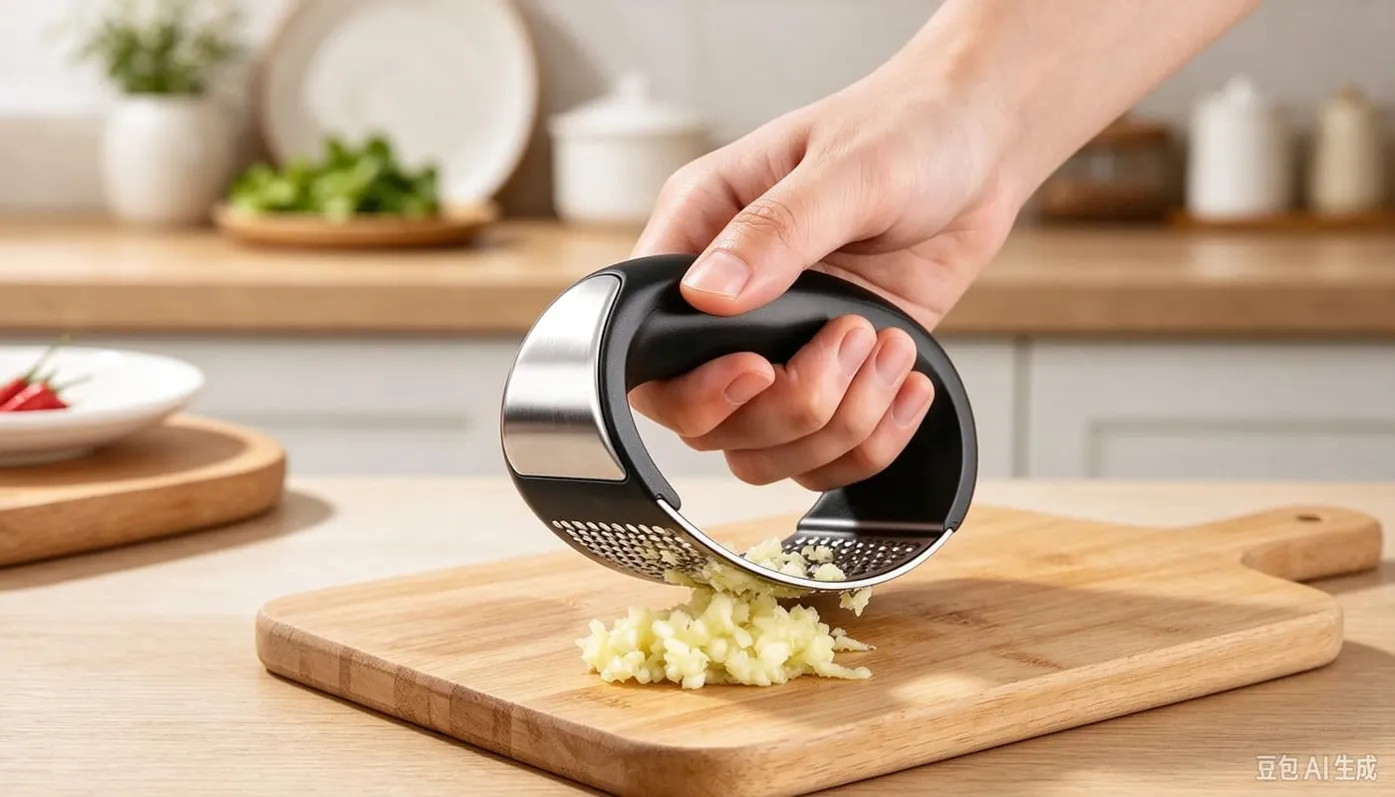
At a trade fair last spring, a distributor showed us a garlic press with a logo that had almost rubbed off after a few washes. He had built a small house brand around it — the first run sold well, until customers started returning it. He had ordered the presses from another supplier, not from us — but the lesson is one every importer building a brand should hear: your name is only as good as the product and the print that carry it.
Private label means selling a proven product under your own brand instead of the factory's — the cheapest way to stop competing on price alone. The same garlic press becomes your garlic press, with your logo, your colours, and your box.
Five proven products to start with
Product | Material | Size / capacity | Standard MOQ |
Garlic press | Food-grade aluminum | 100 g | 200 pcs |
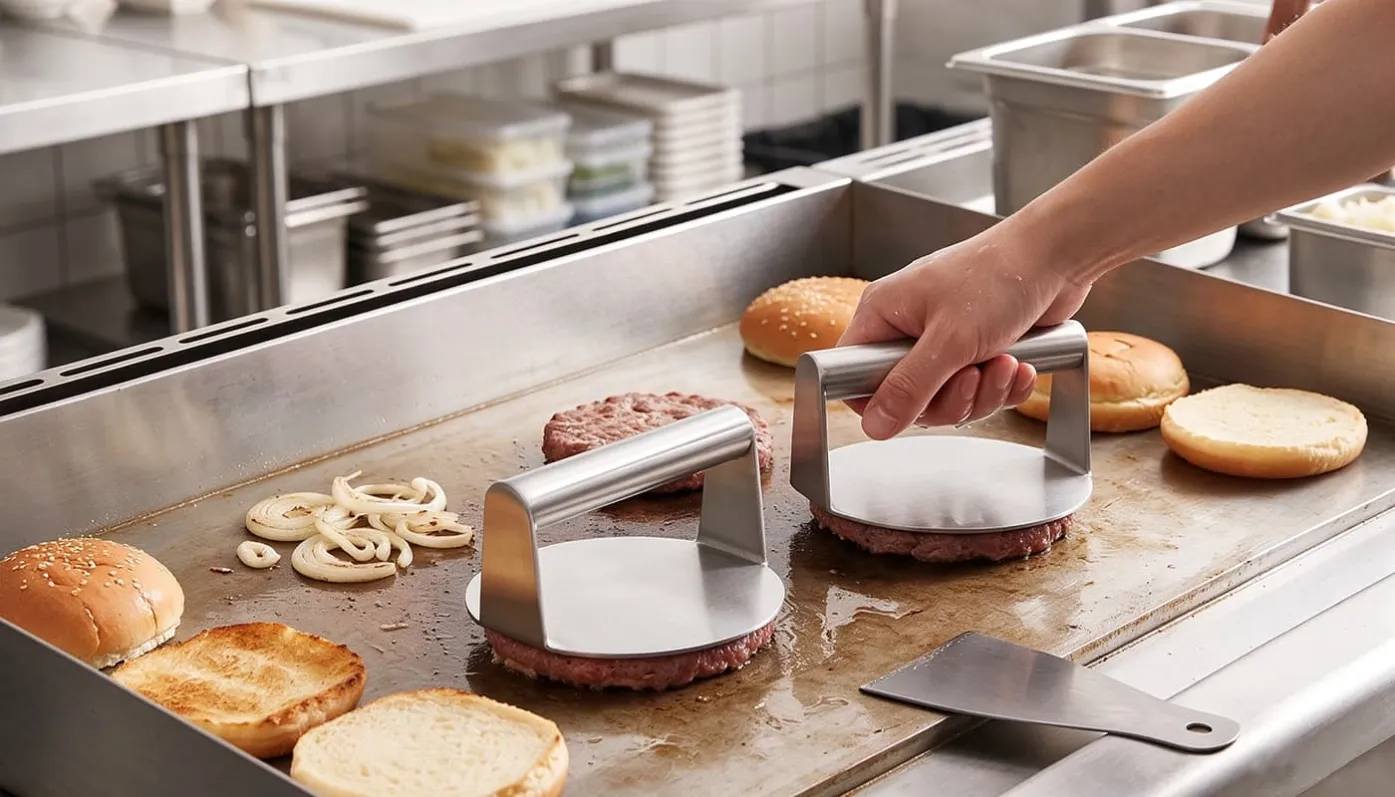
Burger smasher | SS304 | 13 / 14 / 16 cm | 106 pcs |
Butter roller | SS304 | 1 L / 1.8 L | 50 pcs |
Batter dispenser with stand | Food-grade SS304 | 1,800 ml | 60 pcs |
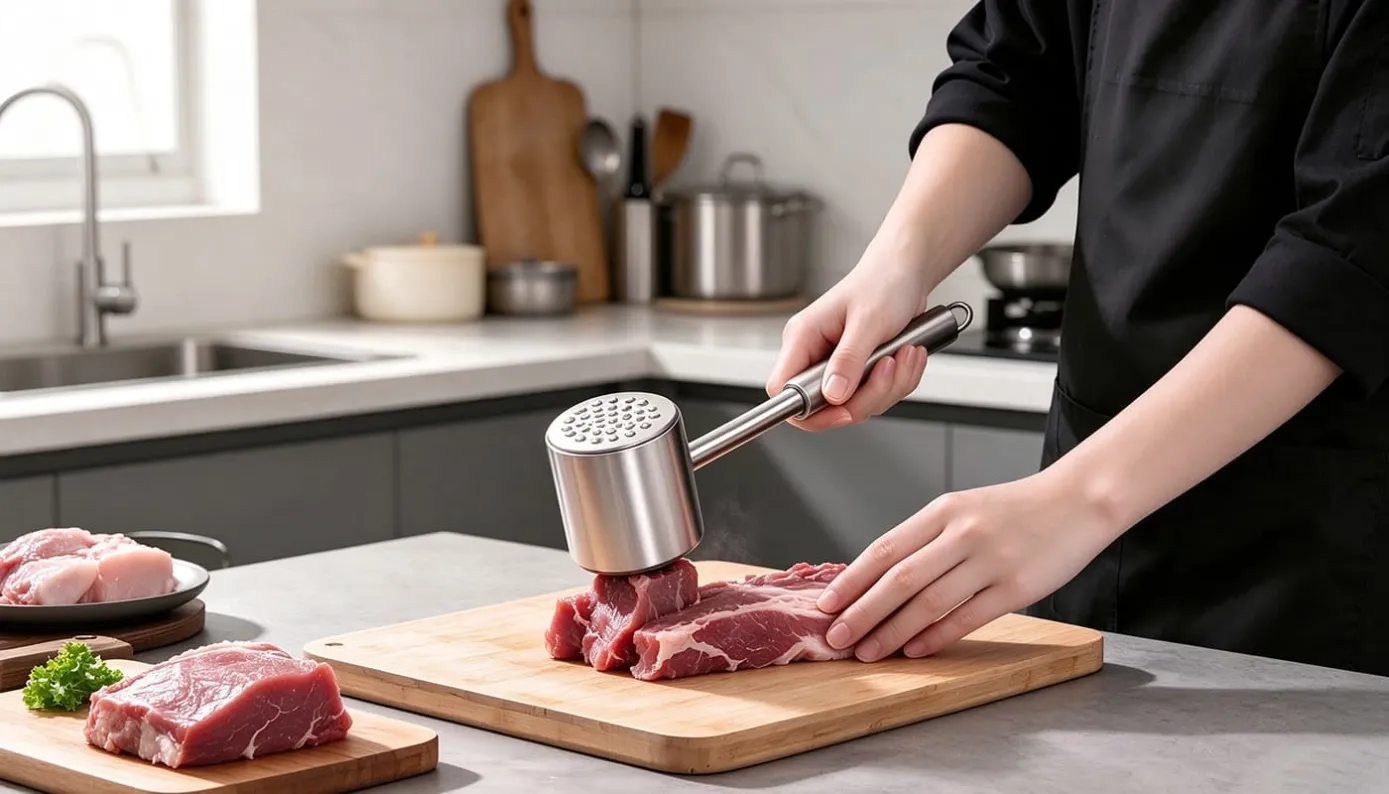
Meat hammer | SS304 | 27 cm long handle | 80 pcs |
- OEM or ODM: know which one you are buying
With OEM, the supplier builds to your specification — your drawing, your material, your packaging. With ODM, you take the supplier's existing design and put your brand on it. Most first orders are ODM: the product and the tooling already exist, so the order can be smaller.
That matters for cost: a new mould is a separate investment that only makes sense behind a large order. Testing a brand for the first time? Start with an existing design — and ask which of the two you are being quoted for.
- What you can put your name on: logo, colour, and packaging
A private label has three layers. The first is the logo on the product itself: on stainless steel tools, laser engraving is the durable choice, because the mark is cut into the metal and survives washing in a way a printed logo may not. That is exactly what failed in the story above.
The second is colour: custom coating is available on products such as coffee accessories. The third is the box — private label and custom packaging are supported across the range. Start with the logo, and add the rest once the first order sells through.
- Start with proven products, not new moulds
The safest first order is a product that already sells. The five tools in the table are all current catalogue products, with standard MOQs from 50 to 200 pieces — small enough to test a brand without filling a warehouse.
A new design can hide problems that only show up after weeks of use. Pick one or two tools that fit the customers you already serve — a burger smasher for burger and BBQ buyers, a batter dispenser for bakeries — and build the brand around them.
- Approve a branded sample before the full run
Never approve a private label order from a photo alone. Ask to see a sample carrying your logo before the full production run, and test it the way your customer will: wash it, use it, and check the mark after a few washes. A logo that looks sharp in a photo and fades in a sink is the most common private label failure, and the easiest to prevent.
Check the colour and the box too: does the coating match the shade you approved, does your barcode scan, and does the box fit without rattling?
How to build a private label range without over-ordering
Start with one or two proven tools, add the next once the first reorders, and mix several products into one container to spread the freight cost. Keep the branded quantity per product low, so a slow seller does not leave you with branded stock you cannot move.
Regions differ: US buyers are often e-commerce sellers building a brand for one marketplace, so a scannable barcode and consistent listing photos matter as much as the product. European buyers face tightening packaging rules, so custom packaging must comply with the market it ships to. Latin American buyers are often distributors building a house brand for retail chains, where one versatile tool serving home and catering buyers alike earns its shelf space fastest.
Frequently asked questions
What is the difference between OEM and ODM?
OEM means the supplier builds to your specification; ODM means you take the supplier's existing design and add your brand. ODM is faster and cheaper for a first order; OEM makes sense when you need a design nobody else sells.
What is the smallest order I can place with my own brand?
It depends on the product and the method. Standard MOQs in the table run from 50 to 200 pieces — confirm the branded MOQ for your exact order before you commit.
Will my logo survive the dishwasher?
Laser engraving cuts into the steel and lasts; a printed logo on a coated surface may not. Approve a branded sample first and wash it the way your customer will.
Conclusion
A private label is a small investment made carefully: start with a proven product, mark it with a method that lasts, approve a branded sample, and ask for the documents behind the claim. The brands that last are built by buyers who check the print as carefully as the price.
Ready to build your own brand? Contact LK Household today to get product options with certified materials, test reports, and a tailored quote for your market.