Buying Guides
Why Dish Racks Rust — and How Buyers Can Prevent It: A Sourcing Quality Checklist
Rust spots and peeling coating are the most common consumer complaints in metal sinkware. A practical checklist on materials, salt spray testing, factory audits and food-contact compliance for importe
Why Dish Racks Rust — and How Buyers Can Prevent It: A Sourcing Quality Checklist
For metal kitchenware importers, few things are more expensive than a rust complaint. A dish rack that develops orange spots after a few weeks in a humid kitchen generates returns, negative reviews, and — worst of all — distrust of the whole brand. Retail buyers tell us it is the single most common reason a sinkware SKU gets delisted.
The good news: most rust and coating failures are visible before the container ships, if you know what to ask. This article explains where the failures actually come from, and gives you a practical checklist to use in your next sourcing round.
Where rust actually comes from
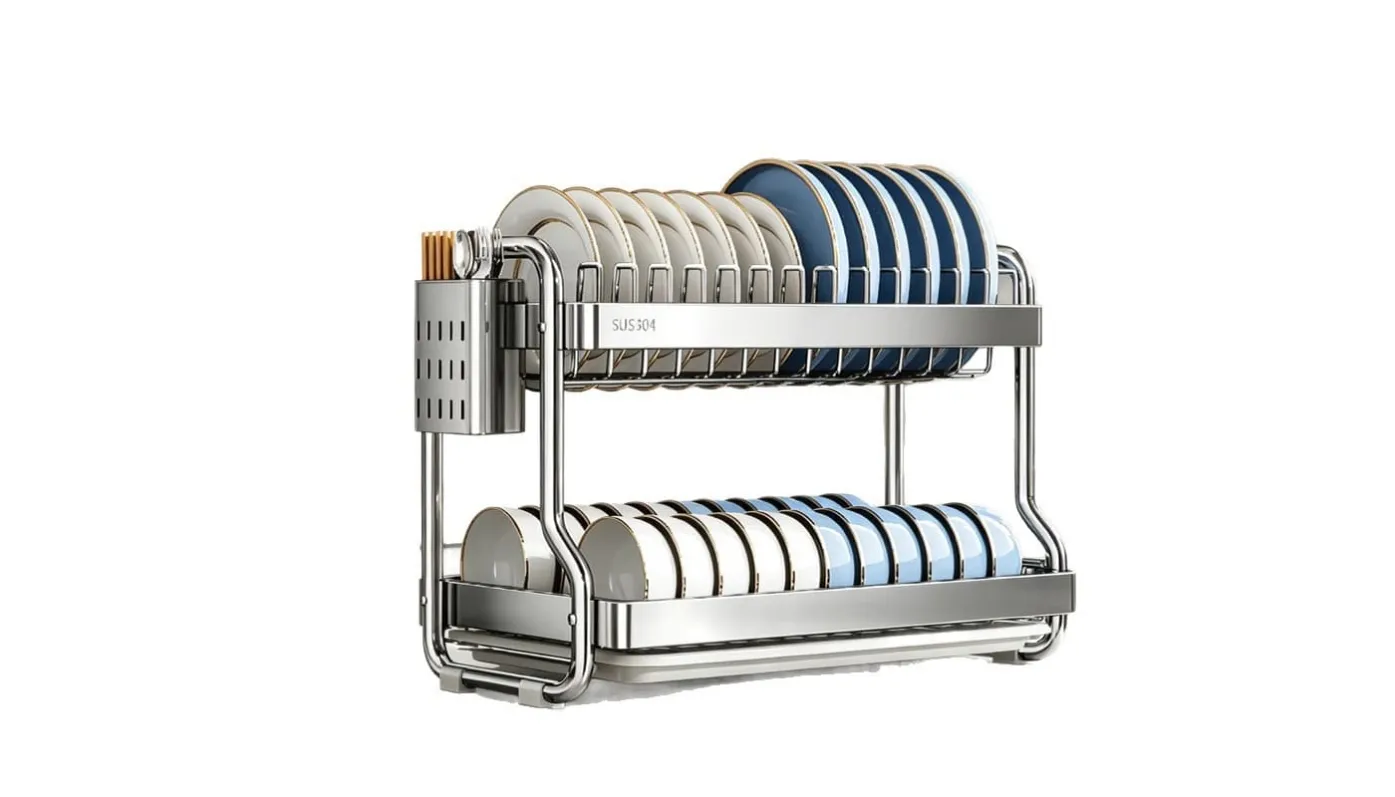
Rusting on a wire dish rack is rarely about "bad steel" alone. In our experience reviewing failed competitor products, four factors dominate:
- Base material choice. Low-carbon iron wire and SS201 stainless are significantly cheaper than SS304 or coated SS430, but much less resistant to corrosion — especially in coastal, high-humidity markets.
- Coating and plating quality. A thin or uneven electro-plate or PVC dip coating leaves micro-gaps. Water sits in the gaps, and corrosion starts underneath a coating that still looks intact.
- Weld points. Every weld burns off some surface treatment. If welds are not cleaned and re-treated, they rust first — buyers who inspect returned racks usually find the first spots exactly there.
- Standing water design. A flat drip tray that traps water against wire joints turns any material weakness into a visible failure. Good products slope or channel water away from contact points.
Any single one of these can sink a product. A supplier who only talks about material grade and never mentions weld treatment or tray drainage is telling you something.
Materials 101: matching grade to market
You do not need SS304 for everything — you need the right material at each price point:
- Iron wire with quality dip coating or plating — the value tier. Acceptable in dry climates and for entry price points, provided coating coverage is thorough.
- SS201 — a cost-effective stainless for mid-tier products; still requires good coating on welds.
- SS430 — a ferritic stainless widely used for drip trays, pans and anti-fingerprint finished racks; strong corrosion performance for the cost.
- SS304 — the food-contact premium grade, standard for colanders, mixing bowls, coffee accessories and premium sinkware.
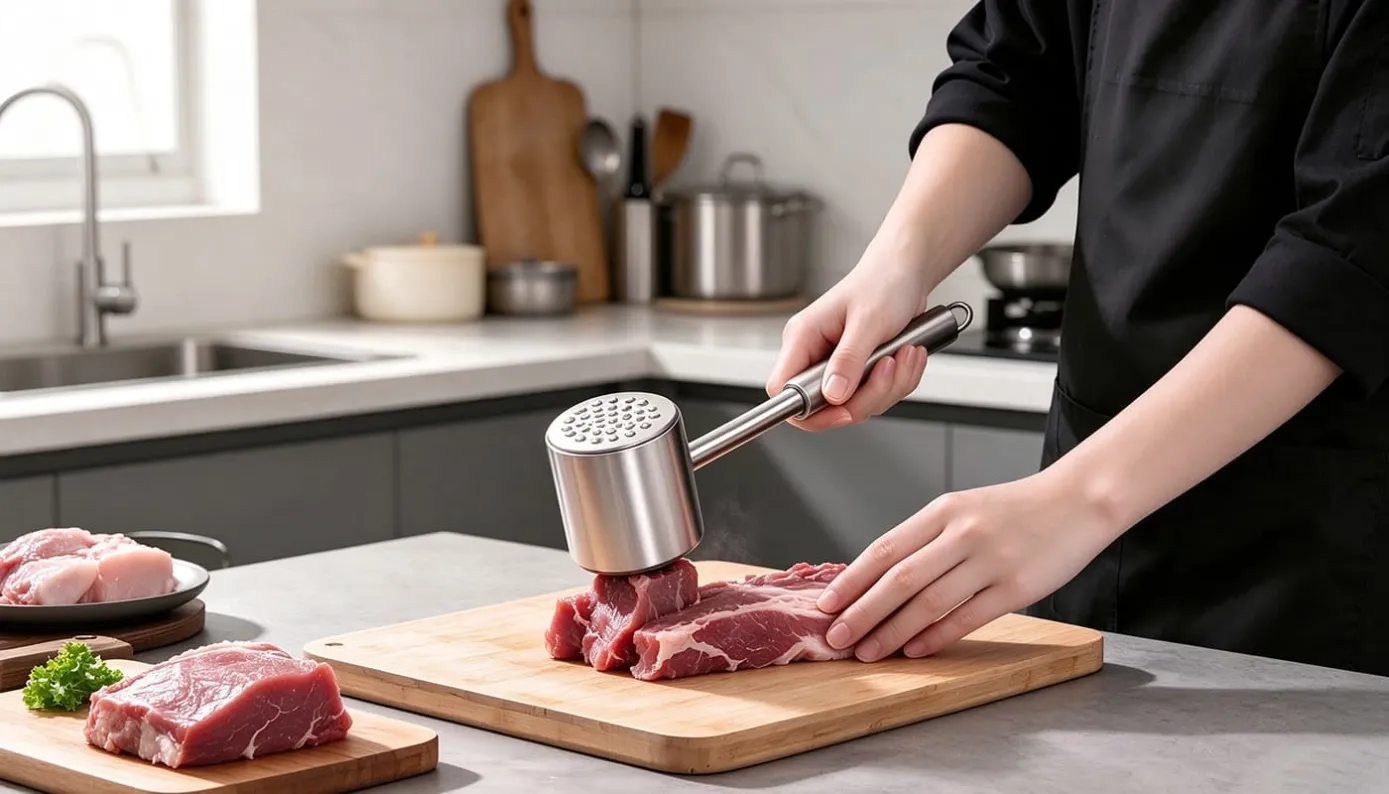
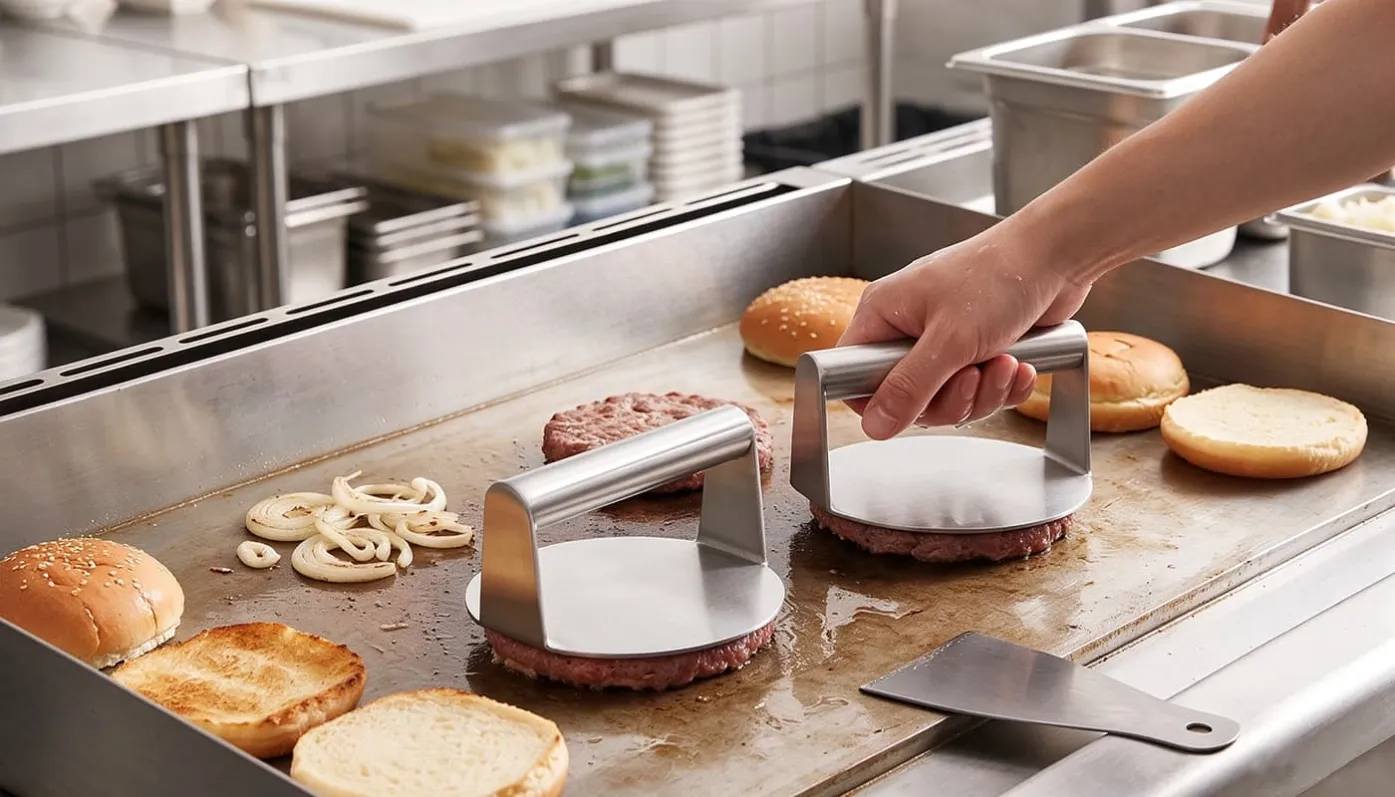
- Aluminum and zinc alloys — used for die-cast kitchen tools (garlic presses, meat mallets, burger presses) where weight and finish matter more than corrosion.
The mistake we see most often is a uniform material decision across a range — either overpaying for SS304 on products that never touch food, or under-specifying racks destined for humid coastal markets.
The test that matters: 24-hour, 5% salt spray, Grade 10
The industry's workhorse corrosion test for coated wire products is the neutral salt spray test (per ISO 9227 / ASTM B117): samples are exposed to a 5% salt fog in a controlled chamber. Results are rated on a 0–10 scale, where Grade 10 means essentially no corrosion after the exposure period — a 24-hour 5% test at Grade 10 is a meaningful benchmark for a coated dish rack.
Audits: what the certificates on the wall actually mean
Material and testing tell you about the product; audits tell you about the factory's consistency. The three that matter most in this category:
- ISO 9001 — quality management systems. It is the baseline for consistent production, not a marketing badge.
- ISO 14001 — environmental management. Increasingly requested by European retail groups.
- BSCI — social compliance auditing. Now a standard requirement for most EU and US retail chains, and increasingly for marketplaces.
For food-contact products — kitchen tools, colanders, bowls, coffee accessories — the bar is different: raw materials must meet food-grade requirements, and finished-product test reports should be on file. Where a report does not exist yet, a serious supplier will offer to arrange third-party testing (LFGB, FDA or the standard your market requires) and quote lead time and cost per item — rather than handing you a vague "food safe" assurance.
The 8-question sourcing checklist
Use this in your next supplier conversation. A capable factory answers all eight without hesitation:
- What is the base material and coating spec for each SKU — in writing?
- Can I see the latest salt spray test report (24h, 5%, grade result) with sample photos?
- Which factory audits do you hold (ISO 9001 / 14001, BSCI), and are certificates dated within the last year?
- For food-contact items: do you hold finished-product test reports, and can third-party testing be arranged per item?
- How are weld points treated after welding?
- Does the drip tray design channel water away from wire joints?
- What inner-box packaging protects the finish during transit and on-shelf scuffing?
- Can I sample-test before the container: scratch test, weight check, and a salt spray spot check?
Question 8 is the one buyers skip most — and it is the cheapest insurance in the whole process.
Compliance should be documented, not promised
This is the standard we hold ourselves to at LK Household, stated by product group rather than as a blanket claim:
- Group A — Sinkware (dish racks, utensil holders, cup racks, sink organization): produced in ISO9001/ISO14001 and BSCI audited facilities; passes a 24-hour 5% salt spray test at Grade 10.
- Group B — Kitchen Tools & Gadgets: raw materials meet food-grade requirements; finished-product test reports are held for selected items, and third-party testing can be arranged where not on file, with lead time and cost quoted per item.
- Group C — Storage & Organization: produced in ISO 9001 audited facilities; food-contact items (fruit baskets, sink colanders) meet food-grade raw material requirements.
If your current supplier cannot answer the checklist above, it is worth a second quote. Send us the item numbers you are evaluating — we will confirm material, finish, MOQ and carton quantity, provide the relevant compliance documentation, and return a price list with samples.
Contact: info@lkhousehold.com · WhatsApp +86 185 7586 4047 · www.lkhousehold.com